Soul Machines AI
Intern Project
Overview
This platform is for a B2B audience interested in AI as the frontline to customer service.
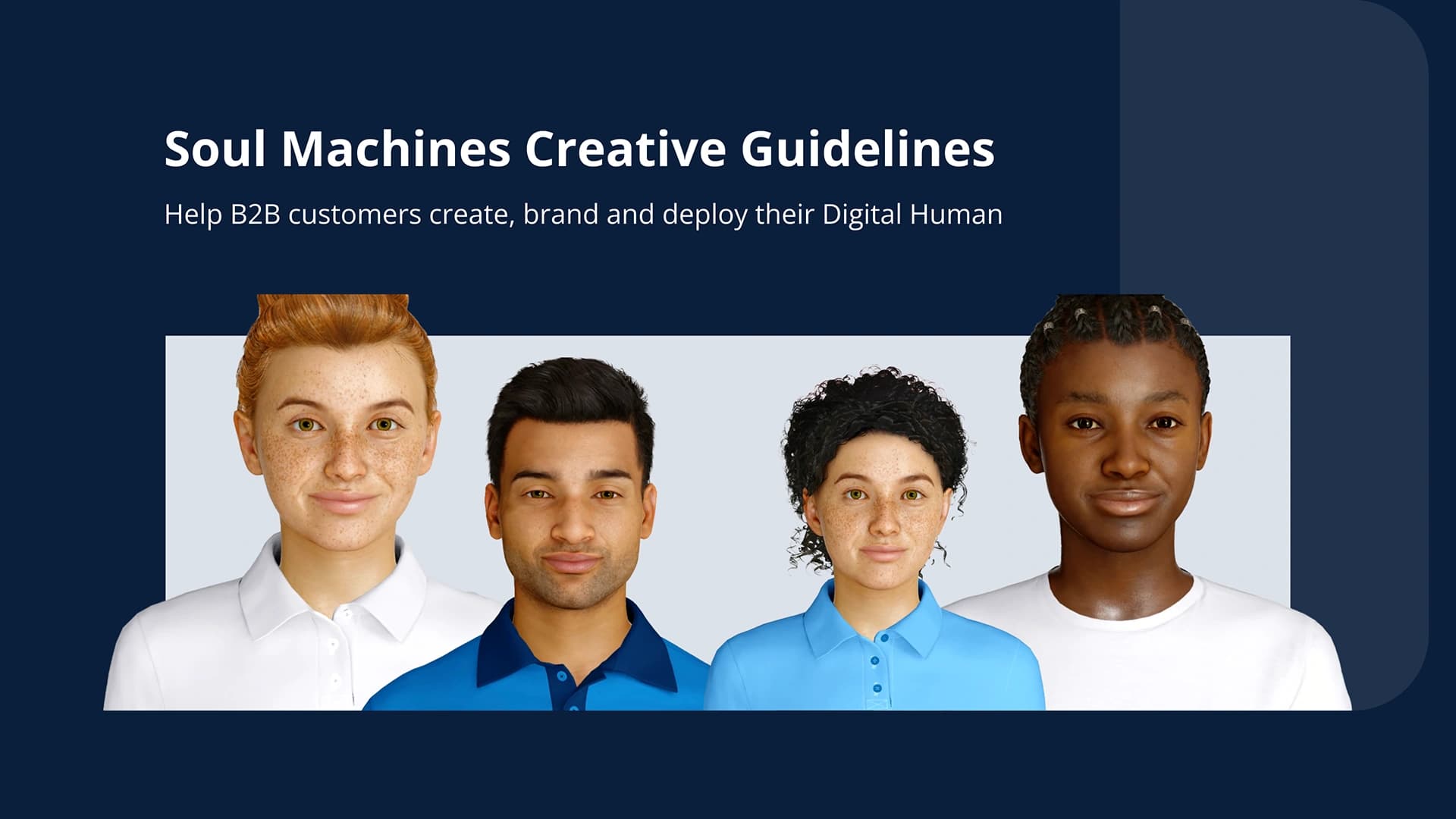
Through understanding the AI (Digital Human) Deployment process, I created guidelines to help our users create, brand and deploy a Digital Human that resonates with their company voice and engages their target audience.
The intended outcome was to advise our users on this unfamiliar process, and offload the time and effort Soul Machines spends into onboarding B2B customers one on one.
Scope
UX audit and design, research, stakeholder collaboration, content planning, writing and visual design
Team
I reported to the Director of Product Design. I collaborated with two senior product designers, four product managers and three engineers.
Creative Guidelines for a B2B audience
The content I created was planned to be in the Support section as Design Guidelines.
Interviewing our product managers, engineers
As I was new to the company and AI technology, I interviewed our product managers and engineers to understand their product initiatives, progress, concerns and vision.
Trying the platform myself
I started putting myself in the shoes of the B2B customer by deploying multiple Digital Persons (DP). I played with our options for appearance, styling, branding and personality.
Breaking down the user flow into tasks and opportunities
The flow below focuses on the content creator audience - B2B customers that want to customise their Digital Person (DP) themselves. This covers the entire process to deploying.
I created a flow of your predicted experience in terms of tasks, their objectives, emotions and opportunities for us to create the content that carries them from start to finish of a smooth deployment experience. The flow below focused on helping our audience create the appearance of the DP.
Solidifying the content architecture
With feedback from the stakeholder interviews, and my own understanding of the user experience and AI technology, I put together a hierarchy of content to help our B2B users design their own DP.
Getting feedback from PMs
I talked with a few PMs again to get their feedback on the design guidelines so far.
Takeaways
Some feedback from the product managers included:
Guiding B2B users to summarise the DP's role and identity for managed expectations. Greater variation in appearance across the two examples. Grid image constraints.
See below for a breakdown of the interview process.
Guidelines Section 1: Identity
For the guidelines, I walk users through by creating two Digital Person examples - one with a corporate branding and one for a creative branding. This is to illustrate the range of industries our platform and technology can apply to, and increase the chances users have of relating with an example.
In Identity, the section helps companies consider their DP's brand voice, purpose and audience.
Guidelines Section 2: Branding
In Branding, this section helps companies craft the appearance of their DP including the shirt, background, logo and platform interface.
Guidelines Section 3: Visual Content
In Visual Content, this orients companies to consider how content will fit and display on the platform interface. It also includes considerations on styling consistency and content format, specifications.
Learnings
I learnt a lot about how we can design for AI in this internship and how AI works in the context of Soul Machines as a company / business. It was deeply interesting and engaging work, being part of the product team and working in sprints to complete projects.
I got the firsthand experience of working in an agile product team, stakeholder interviews, design critiques, 1:1s, ideating with designers and engineers, presentations, and delegating work to another intern.
Working at Soul Machines gave me the lens on how high-performing teams work, and instilled in me a collaborative and iterative mindset I now bring to other workplaces.